
At its heart, a content creator is a modern storyteller. They’re the ones producing and sharing original digital content—like videos, articles, and social media posts—to pull together and engage an online community. This isn't just a hobby anymore; creators often run their work like a small business, turning a passion into a profession by building an audience and finding ways to monetize their work.
Defining the Modern Content Creator

Think of a content creator as a digital artisan. Instead of working with wood or clay, they’re crafting digital experiences meant to inform, entertain, or inspire a specific group of people. Their workshop isn't a dusty studio; it’s a mix of digital tools, online platforms, and smart strategies they use to bring their ideas to life.
This role is a fascinating blend of raw creativity and sharp entrepreneurship. On one hand, they're the writers, filmmakers, and photographers. On the other, they’re the marketers, community managers, and business strategists responsible for growing their personal brand.
To get a clearer picture of what this role involves, let's break down the key components.
The Content Creator at a Glance
This table sums up the core aspects of being a modern content creator, from the creative spark to the business side of things.
| Aspect | Description |
|---|---|
| Core Function | To produce and share original digital content that engages a specific audience. |
| Primary Goal | Build and nurture a loyal online community around a shared interest or passion. |
| Key Activities | Writing, filming, recording, editing, community management, and performance analysis. |
| Business Model | Monetization through ads, sponsorships, affiliate marketing, merchandise, and direct support. |
| Mindset | A unique blend of artist, entrepreneur, marketer, and community builder. |
Ultimately, being a creator is about turning an idea into a sustainable digital presence that connects with people.
The Creator Economy Fueling the Movement
The rapid rise of content creators has sparked what we now call the creator economy—a massive ecosystem built entirely around their work. This boom is fueled by platforms that give anyone with a phone and an idea the power to become a publisher.
Globally, there are now over 207 million active content creators, a number that has completely exploded from just a few million a decade ago. Platforms like YouTube and TikTok have torn down the old barriers to entry. In the United States alone, 162 million people now call themselves creators, with a solid 45 million doing it as their profession.
At its core, being a content creator is about building a connection with an audience through authentic and valuable content. It's less about going viral once and more about fostering a loyal community that trusts your voice and perspective over time.
The Shift from Broadcaster to Community Builder
Unlike traditional media, which just blasts one message out to millions, a content creator cultivates a two-way relationship. They aren't just entertainers on a distant stage; they're active members of the very community they helped build. It's this interaction that sets them apart and makes their influence so potent.
Their work is a constant loop of creating and listening:
- Producing Content: This is the main event, whether it's filming a video, writing a blog post, or recording a podcast.
- Engaging the Audience: They jump into the comments, run polls, and join discussions to make that community bond even stronger.
- Analyzing Performance: Creators live by their metrics, tracking what works (and what doesn't) to fine-tune their strategy for the next piece of content.
As technology gets smarter, so does the creator's workflow. Many now use automation to handle the tedious, repetitive stuff, which frees up more time for the actual creative process. You can learn more about how creators are scaling their output in our guide on what is content automation (https://shortsninja.com/blog/what-is-content-automation/). For a deeper look at the specific skills involved, this guide on what defines a modern content creator is a fantastic resource.
What Kind of Creator Will You Be? Exploring the Archetypes
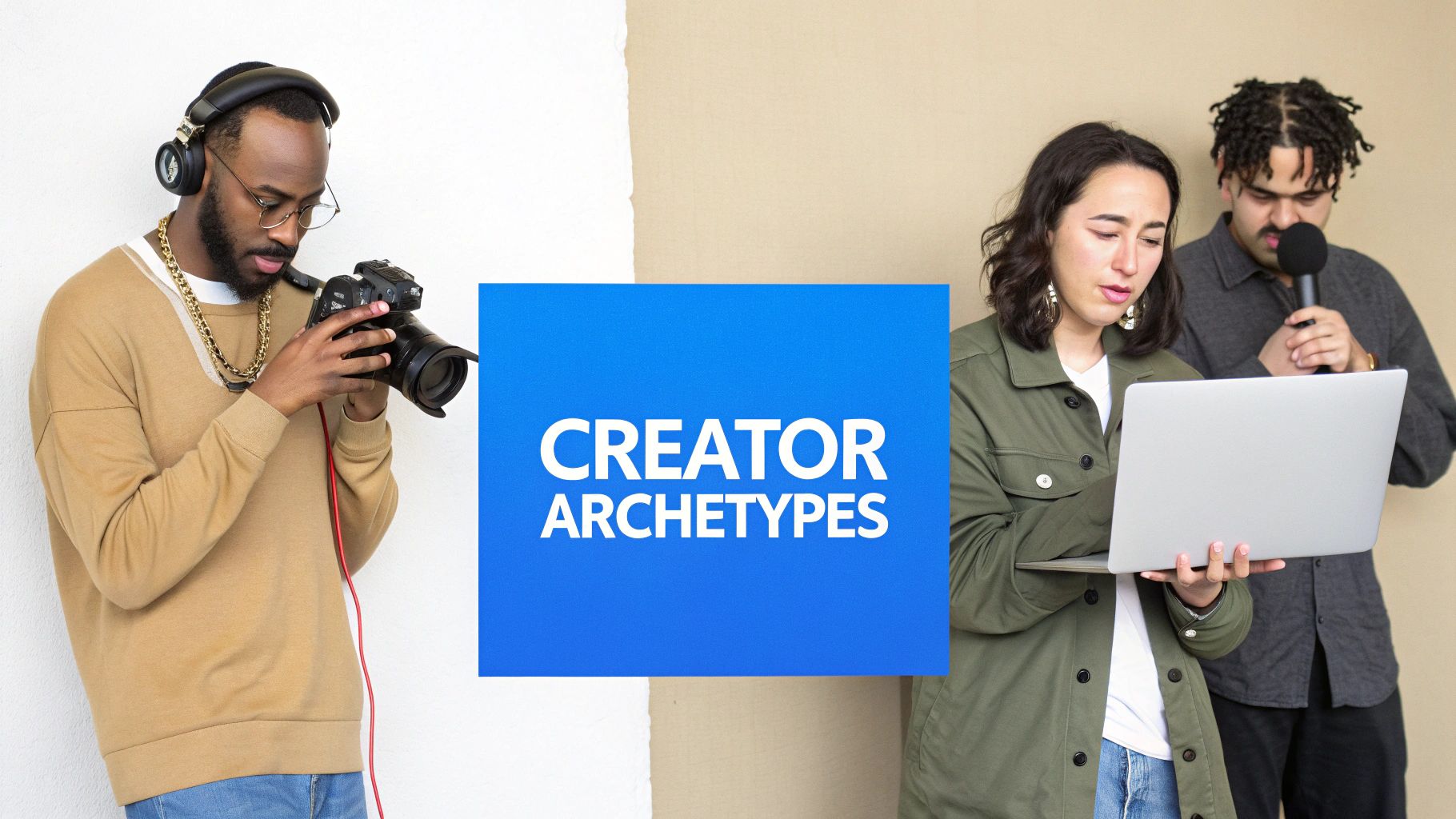
The term "content creator" isn't a one-size-fits-all job title. Think of it more like a massive umbrella covering a whole spectrum of unique roles and skills. Each type of creator—or archetype—chooses a specific medium to master, which in turn shapes the relationship they build with their audience.
Just like a painter picks a canvas and a sculptor works with clay, a modern creator chooses a platform that best fits their personality and storytelling style. From the high-energy, real-time world of live streaming to the carefully crafted words of a blog, each path serves a different purpose.
Let's dive into some of the most common creator archetypes you'll find out there.
The Strategic YouTuber
YouTubers are essentially the filmmakers of the creator economy. They specialize in video, creating everything from quick, hilarious skits to deep-dive documentaries. To make it on YouTube, you need a cocktail of on-screen charisma, sharp video editing chops, and a solid feel for the platform's ever-changing algorithm.
Their content is often highly produced, involving scripts, shooting schedules, and hours of post-production. The name of the game is grabbing viewer attention and keeping it, because watch time is the currency of YouTube.
The Intimate Podcaster
Podcasters are masters of audio, and their superpower is creating a uniquely personal connection with listeners. They use just their voice to build trust and authority, often breaking down complex topics in a casual, conversational way. It's the perfect medium for a multitasking audience, who can tune in during a commute, a workout, or while doing chores.
At its core, podcasting is all about great storytelling and consistency. Whether it's a solo host, an interview series, or a scripted narrative, the goal is to create an immersive audio experience that has listeners hitting "subscribe" and coming back for more.
A common thread connecting almost every creator archetype is the ability to build a genuine community. They aren't just pushing content out into the void; they're creating a space where people with shared interests can connect and feel like they belong.
The Authoritative Blogger
Bloggers are the original wordsmiths of the internet. They build loyal followings through expertly written articles that inform, educate, or entertain. Their main skill is crafting compelling content that’s also optimized for search engines, which helps them pull in organic traffic from people actively looking for answers.
A great blogger eventually becomes a trusted voice in their niche. Their work typically involves:
- Deep Research: Digging up credible information to back up their claims.
- SEO Mastery: Understanding what it takes to rank on Google for the right keywords.
- Clear Communication: Distilling complicated ideas into easy-to-digest posts.
Because their platform is their own website, they have total control over their content and how they make money, whether it's through affiliate links or selling their own digital products.
The Trend-Setting Social Media Influencer
While nearly all creators have influence, this archetype lives and breathes the fast-paced world of platforms like Instagram, TikTok, and X (formerly Twitter). Their content is visual, timely, and engineered to stop the scroll. They have a sixth sense for spotting and jumping on trends before they go mainstream.
Influencers often build their brand around a specific lifestyle, like fashion, travel, or fitness. Their success depends on authenticity and building a strong, personal rapport with followers, which makes a product recommendation feel more like advice from a friend. This connection is why global spending on influencer marketing is expected to hit $33 billion in 2025.
The Engaging Live Streamer
Live streamers thrive on pure, unscripted, real-time interaction. Using platforms like Twitch or YouTube Live, they broadcast everything from gaming sessions to creative projects, all while chatting directly with their audience. This archetype is all about spontaneity and community.
The magic of live streaming is its raw, unedited feel. It creates a shared experience where the audience isn't just watching—they're participating. Building a career as a streamer demands incredible consistency and the energy to be "on" for hours at a time, cultivating a loyal community that shows up for every single broadcast.
A Day in the Life of a Content Creator
That slick final video, perfectly polished article, or crystal-clear podcast episode? That’s just the highlight reel. Behind every piece of content is a surprisingly disciplined process that feels a lot more like running a small business than just hitting "record" and hoping for the best.
So, forget the glamorous montages. The reality of a creator’s day is a constant balancing act between raw creative energy and sharp, strategic execution. It’s a structured routine that kicks off long before the camera turns on or the first word hits the page.
Think of it as a three-act play that repeats every single day: Ideation and Planning, Production, and finally, Post-Publication.
The Morning Creative Spark
For most creators, the morning is sacred. It’s when creative energy is at its peak, making it the perfect time for the foundational work: planning and scripting. This isn’t about passively waiting for a muse to show up; it’s a proactive, strategic hustle. A typical morning might look like this:
- Content Ideation: Brainstorming topics that actually resonate with their niche and audience. This means digging into trending topics, seeing what competitors are up to, and, most importantly, listening to what their own community is asking for.
- Keyword Research: This is non-negotiable, especially for bloggers and YouTubers. They’re diving into tools to see what their audience is actively searching for, giving their content a fighting chance of being discovered in the first place.
- Scripting and Outlining: No great video or article just happens. The morning is prime time for structuring thoughts, writing out a full script, or building a detailed outline that will guide the entire production process.
This is the strategic groundwork that separates the pros from the hobbyists. It ensures every piece of content has a clear purpose before the real work even begins.
The Afternoon Production Grind
With a solid plan locked in, the afternoon is all about execution. This is the hands-on, get-it-done part of the job that demands focus, technical skill, and a whole lot of patience.
For a YouTuber, this means setting up lights, tweaking camera settings, and getting the audio just right before filming. For a blogger, it’s that dedicated block of time for writing and sourcing the perfect images. A podcaster might be recording an interview or laying down a solo episode. This is often the most time-consuming part of the day, filled with multiple takes, revisions, and an almost obsessive attention to detail.
The most successful creators are masters of process, not just creativity. They build repeatable workflows that allow them to produce high-quality content consistently, even on days when they don't feel particularly inspired.
Once the raw material is captured, the editing begins. This is where the real story takes shape—cutting clips, color grading footage, mixing audio, and adding in graphics. For many, this is where the magic happens, but it’s also a meticulous and often tedious task. It’s not uncommon to spend hours editing for just a few minutes of finished content.
The Evening Business and Community Management
The workday doesn’t end when the "publish" button is clicked. In fact, for many creators, that’s when the second half of their job kicks off. The hours after content goes live are crucial for stoking engagement and handling the business side of the brand.
- Community Engagement: This is all about connection. They’re replying to comments on YouTube, answering DMs on Instagram, and jumping into discussions on X (formerly Twitter). Building a loyal community is a two-way street.
- Performance Analysis: Time to geek out on the data. Creators dive into their analytics to see how the new content is performing, tracking metrics like watch time, click-through rates, and audience retention to figure out what’s hitting the mark and what isn’t.
- Business Development: The inbox never sleeps. This is when they’re replying to emails from potential sponsors, negotiating brand deals, and planning out future collaborations.
This blend of creativity, technical production, and straight-up business management is the true reality of a content creator’s life. It’s a demanding role that requires discipline, strategy, and an unshakable passion for connecting with an audience.
How Content Creators Actually Make Money
Turning your creative passion into a real paycheck is about much more than just hitting "publish." It takes a smart, business-minded approach to monetization. For any creator, the key is building a handful of different income streams so you’re never at the mercy of a single platform's algorithm or a sudden policy change.
The leap from getting views to actually earning revenue is a strategic one. It usually starts with the basics and, over time, evolves into a full-blown business that you control.
Lots of creators get their first taste of monetization through the platforms themselves. Think of it as the most direct path to earning: the platform pays you a slice of the ad money generated from the content you're already making.
This entire process—from creation to engagement—is what fuels every single way a creator can make money.
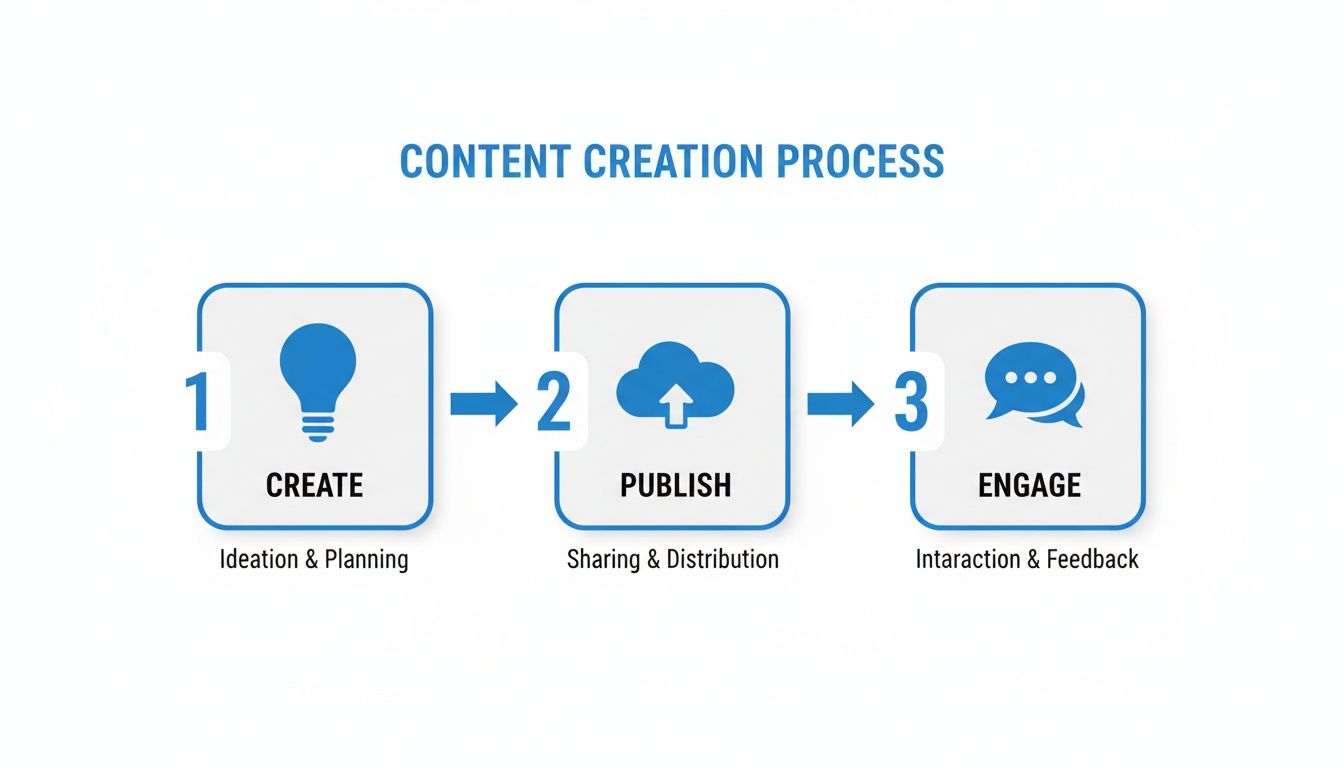
This simple loop shows how it all connects. You create something valuable, your audience engages with it, and that engagement is what opens the door to income. The more people you have paying attention, the more ways you can monetize that attention.
Comparing Creator Monetization Models
To give you a clearer picture, let's break down the most common ways creators earn an income. The table below compares different models, showing you what to expect in terms of income potential and the effort required to make it work.
| Monetization Model | Income Potential | Effort Level | Best For |
|---|---|---|---|
| Ad Revenue | Low to Medium | Low | Creators with large, consistent viewership. |
| Affiliate Marketing | Medium | Medium | Niche creators with a trusting audience. |
| Brand Deals | High | High | Influencers with strong engagement and a clear brand. |
| Digital Products | High | High (upfront) | Experts who can package their knowledge. |
| Direct Support | Low to Medium | Low to Medium | Creators with a highly dedicated community. |
As you can see, there's no single "best" way—it's about finding the right mix for your channel and your audience. The most successful creators don't rely on just one of these; they build a diverse financial foundation.
Foundational Income Streams
For most new creators, the first stop is tapping into the built-in monetization tools on platforms like YouTube or TikTok. These are usually the easiest to get started with, but they're almost always tied directly to your audience size and how much they interact with your content.
-
Ad Revenue: This is the classic model. On YouTube, once you qualify for the Partner Program, you earn a share of the revenue from ads played on your videos. TikTok has its Creator Fund and Pulse programs that do something similar, rewarding creators for popular content.
-
Affiliate Marketing: This is where you promote a product or service and get a commission when someone buys it through your unique link. A tech reviewer might drop affiliate links for the cameras and mics they use, earning a small cut from any sales.
While these methods are a great starting point, they can be unpredictable. Your income can swing wildly based on algorithm changes. To build a more stable career, creators have to diversify into models that give them more control.
Direct and Collaborative Monetization
Once a creator's influence starts to grow, so do the opportunities for direct partnerships. This is where the real business of content creation kicks into high gear, turning that influence into serious income through brand collaborations.
This is the very engine of the influencer marketing world. Brands pay creators to talk about their products in a way that feels natural and authentic. The global influencer market is projected to hit a staggering $33 billion in 2025, a massive jump that shows just how much companies value these partnerships.
Successful monetization isn't just about chasing brand deals. It's about building a business where your audience is the customer, not just the product. That means creating value they are genuinely willing to pay for.
These collaborations work so well because they tap into the trust a creator has built with their audience. A recommendation from someone you follow and respect feels more like a tip from a friend than a traditional ad, which is why it delivers such great results.
Building a Creator-Owned Ecosystem
The ultimate endgame for many top creators is to build their own business—an ecosystem that doesn't depend on outside platforms or brands. This is the most advanced stage of monetization, where you create and sell your own products directly to the people who already love your work. It's the moment a content creator truly becomes an entrepreneur.
Here are a few common ways they do it:
-
Selling Digital Products: This can be anything from e-books and Lightroom presets to exclusive video courses. Digital products are amazing because you create them once and can sell them forever with almost no extra cost.
-
Launching Merchandise: From t-shirts and hats to custom-designed gear, merch gives your fans a way to support you while getting something cool in return.
-
Offering Online Courses: If you're an expert in your niche, you can package that knowledge into a comprehensive course. This creates a high-value product that can become a major source of income.
-
Direct Audience Support: Platforms like Patreon or YouTube Channel Memberships let your biggest fans pay a monthly subscription for exclusive content, early access, or other special perks.
By layering these different income streams, creators build a business that's far more resilient and sustainable. And as technology keeps evolving, so do the opportunities—check out our guide on 5 ways AI boosts video monetization for some fresh ideas. This multi-layered approach is what truly separates the hobbyists from the professionals.
The Essential Toolkit for Modern Creators
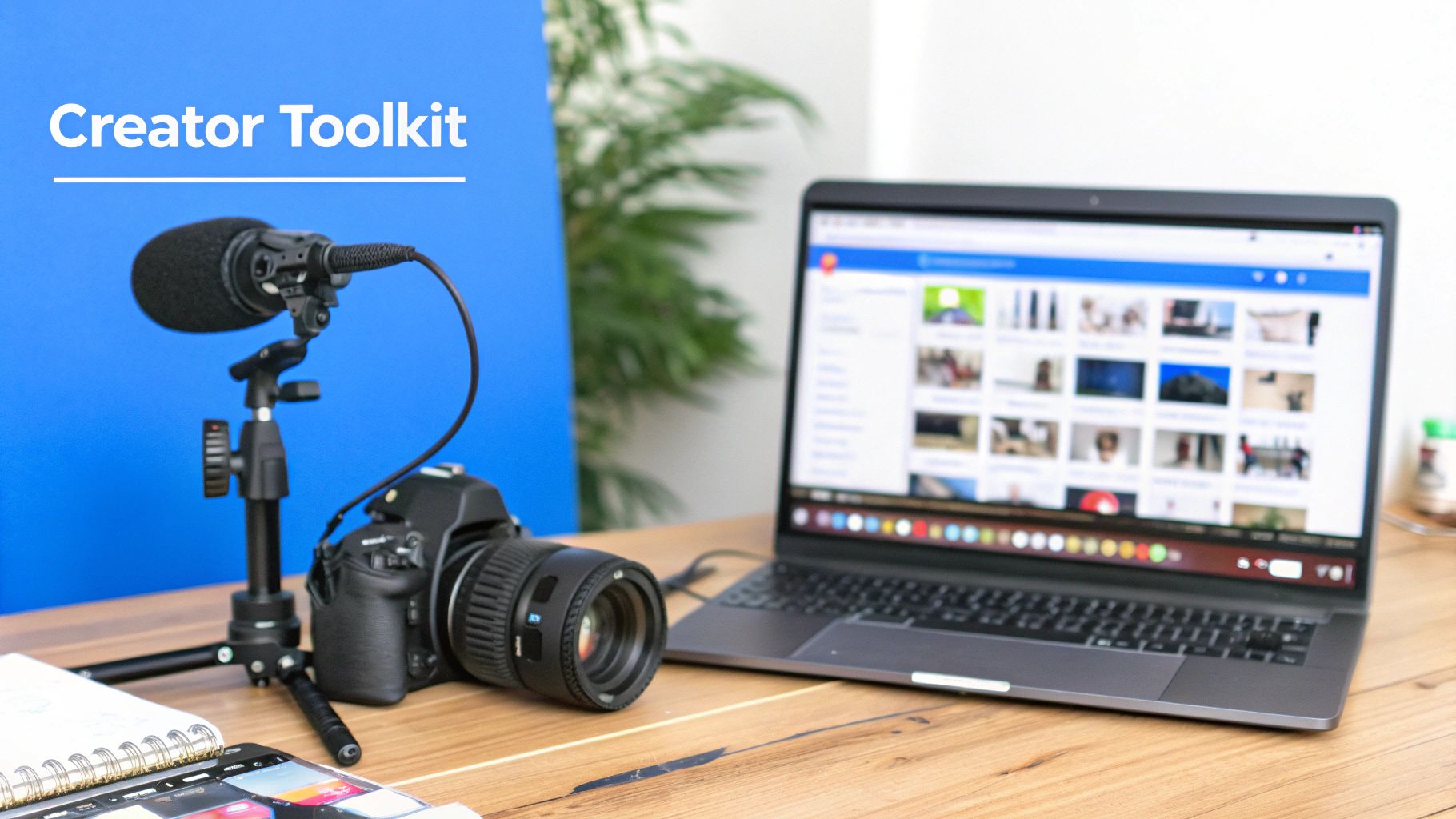
Behind every great piece of content is a creator who picked the right tools for the job. Just like a musician needs a fine-tuned instrument, you need a solid tech stack to bring your ideas to life. Putting together this toolkit is one of the first real steps toward turning a creative spark into something people can actually watch, read, or listen to.
The great news? You don’t need a Hollywood budget anymore. The tools available today are incredibly powerful and more affordable than ever, covering everything from brainstorming to hitting "publish." Let's walk through the hardware, software, and the new wave of AI that's changing the game.
Core Hardware for Every Creator
Your smartphone can get you surprisingly far, but investing in a few pieces of dedicated hardware will instantly level up your content's quality. This is how you make your work look and sound professional enough to cut through the noise.
-
A Quality Camera: This could be a DSLR, a mirrorless camera, or even a top-tier webcam. A good camera gives you way more control over things like focus and lighting, creating that crisp, polished look for videos and photos.
-
A Dedicated Microphone: Bad audio is a dealbreaker. An external USB or XLR microphone captures rich, clear sound that your built-in mic can't even dream of. If you're a podcaster, streamer, or YouTuber, this is non-negotiable.
-
Reliable Lighting: Good lighting is the secret ingredient that separates amateur videos from professional ones. A simple three-point lighting setup, which you can build with affordable ring lights or LED panels, gets rid of harsh shadows and makes you look sharp.
These three things are the foundation of your creative space, whether that’s a full-blown studio or just a corner of your desk.
Essential Software for Production
Once you've captured your raw footage or audio, software is where the magic happens. The right programs make your workflow smoother and open up creative doors you didn't even know existed. What you use will depend on your niche, but a few categories are universal.
Think of your software as your digital workshop. A video editor might use Adobe Premiere Pro or DaVinci Resolve to slice up footage and add effects. A graphic designer probably spends their day in Canva or Adobe Photoshop crafting eye-catching thumbnails. Writers live in Google Docs and lean on Grammarly to keep their copy clean.
The best tools are the ones that feel invisible. Your toolkit should get out of your way and let you create, making your process faster and more fluid—not adding another layer of frustration.
The goal is to find software that matches your skill level and budget while giving you the power to create without hitting a technical wall.
The Rise of AI in Content Creation
The biggest shift in the creator's toolkit right now is artificial intelligence. AI isn't some far-off concept anymore; it's a real, practical assistant that helps creators work smarter, not harder. It handles the boring stuff, sparks new ideas, and even unlocks entirely new ways to make content. If you want to keep up, it's a good idea to check out the best AI tools for content creators available today.
AI-powered platforms like ShortsNinja are a perfect example of this shift, completely changing how creators tackle short-form video. Instead of spending hours scripting, filming, and editing, you can automate huge chunks of the work. For anyone trying to grow on TikTok or YouTube Shorts, these tools are a lifesaver. Our own guide digs into many other AI tools for content creators that can help you scale your production.
This lets you focus on big-picture strategy and connecting with your audience while the AI does the heavy lifting. A smart toolkit, after all, is a creator's best asset.
So you’re ready to jump in? Great. That initial spark of inspiration is the most important part. But let's be real—turning that spark into something people actually want to watch, read, or listen to takes a plan.
This isn't about chasing viral fame overnight. It’s about building something real, step by step. And it all starts with one decision that will shape every single thing you create.
Find Your Passionate Niche
Before you even think about a camera or a microphone, you have to nail down your niche. A niche is just the specific corner of the internet you’re going to own. It's that sweet spot where what you love talking about overlaps with what a specific group of people is dying to know more about.
Why does this matter so much? Because your passion is the only fuel that will get you through the tough days. When you genuinely love your topic, that energy comes through, making your content feel real and creating a much deeper connection with your audience.
A killer niche is specific enough to cut through the noise but broad enough that you won't run out of ideas in a month.
- Don't just do "travel." Do "solo female travel in Southeast Asia."
- Don't just do "cooking." Do "30-minute vegan meals for busy parents."
- Don't just do "gaming." Do "retro Nintendo game speedruns."
Getting specific like this makes it infinitely easier to find your people—the ones who will become your loyal community.
The most successful content creators don't try to appeal to everyone. They find their unique corner of the internet and become the go-to voice for a dedicated community that shares their specific passion.
Identify Your Ideal Audience
Once you know your topic, you need to get hyper-specific about who you’re talking to. The best way to do this is to create an "audience persona"—a detailed profile of your ideal follower. Seriously, give them a name, an age, hobbies, and problems.
What keeps them up at night? What are they trying to figure out? What other creators do they follow? When you understand this, you stop creating for a faceless crowd and start creating for one person. This tiny mental shift will make your content a thousand times more effective.
Develop a Sustainable Content Strategy
Okay, you’ve got your niche and you know who you’re talking to. Now it’s time to build a simple, realistic plan. Your first strategy only needs two things: platform selection and consistency.
-
Choose Your Platform Wisely: You can't be everywhere at once, so don't even try. Pick one or two platforms where your ideal audience is already hanging out. If your content is super visual, Instagram or YouTube are no-brainers. If you’re all about deep dives and discussions, a blog or podcast might be a better fit.
-
Commit to a Realistic Schedule: This is key. Consistency beats frequency every time. It’s far better to post one fantastic video every week than seven sloppy, rushed ones. A predictable schedule builds trust and trains your audience to look forward to your content.
Start small, be consistent, and never forget that being yourself is your biggest advantage. Your first piece of content won’t be perfect, and that’s more than okay. The whole journey starts with one simple move—hitting publish.
Got Questions? We've Got Answers
Stepping into the world of content creation can feel like learning a new language. Everyone has questions at the beginning, so let's tackle some of the most common ones head-on.
Do I Really Need Fancy Gear to Get Started?
Nope. Not at all. While that pro-level camera might be a great goal for down the road, the smartphone in your pocket is more than powerful enough to create amazing content right now.
Get the basics down first: find good lighting (a window works wonders), make sure your audio is clear, and focus on telling a great story. Your creativity will always be more valuable than your camera. Plenty of top-tier creators got their start with just a phone and a good idea.
How Long Until I Start Making Money?
This is the million-dollar question, and the honest answer is: it depends. There’s no magic number here. Your timeline for monetization is tied directly to your niche, the platform you choose, and how consistently you show up.
Some creators get their first affiliate marketing check within a few months. For others, it might take a year or more to hit the requirements for something like YouTube's ad revenue program.
Think of it like this: success as a content creator is a marathon, not a sprint. The creators who build lasting careers are the ones who obsess over giving their community value, day in and day out. The money follows that trust.
Your first job is to build a community that cares about what you have to say. Once you have that, the income streams will open up.
What if I Just… Run Out of Ideas?
This is a totally normal fear, but it's one you can beat with a simple system. The best creators don't just sit around waiting for a lightbulb moment—they have a process for finding inspiration.
Here’s a simple framework:
- Listen to your people. What questions are they asking in your comments? What are they struggling with? That's your content goldmine.
- Keep an eye on your niche. What are other creators talking about? What's trending? Put your own spin on it.
- Don't reinvent the wheel. Turn a long-form video into a dozen short clips. Take a popular blog post and make it an Instagram carousel. Repurpose everything.
A basic content calendar can be a lifesaver, giving you a backlog of ideas so you’re never staring at a blank screen.
Ready to create binge-worthy short videos without spending hours chained to your editor? ShortsNinja uses AI to turn your ideas into slick, faceless content for TikTok and YouTube in minutes. Start your free trial today and see how easy it is.