
Think of TikTok automation as your secret weapon—a smart assistant working behind the scenes, 24/7, to handle all the repetitive stuff so you can get back to being creative. This isn't about spam bots or fake engagement. It’s about using smart systems to brainstorm ideas, create videos, schedule your posts, and even analyze what’s working. The goal is to scale up your content and stay consistent without hitting that dreaded burnout wall.
What Is TikTok Automation Really?
At its heart, TikTok automation is simply using software to take over the manual, time-sucking tasks on the platform. Imagine your content creation process is like a car factory. Doing it all by hand—sketching the design, sourcing the parts, and assembling everything piece by piece—is incredibly slow and draining.
Automation is like bringing in a high-tech assembly line. You still provide the creative blueprint (your unique idea), but specialized machines handle the grunt work. One machine generates a script, another creates the video assets, and a final one schedules it to go live. The human designer isn't replaced; they're empowered to oversee a much bigger, more efficient operation. We dive deeper into this concept in our guide on what content automation is.
The Shift From Manual Grind to Smart Systems
The old way of doing TikTok is a relentless grind. You’re constantly brainstorming, scripting, finding visuals, editing, writing captions, researching hashtags, and then trying to post at the perfect time. It’s not just exhausting; it’s a recipe for inconsistency and creative fatigue.
TikTok automation flips that script entirely. Instead of drowning in manual tasks, you use tools to do the heavy lifting. This frees you up to think about the big picture—your strategy, your brand, and your next big creative leap.
Automation lets you graduate from being a content producer to a content strategist. You start making smart, data-driven decisions that actually move the needle.
This isn't just about clawing back a few hours. It's about building a sustainable content engine that keeps working for you, even when you’re not.
A Glimpse into an Automated Workspace
The real power of automation clicks into place when you see it in action. A good platform brings idea generation, content creation, and scheduling all under one roof, creating a seamless workflow.
Here’s a peek at what a typical scheduling calendar looks like inside a TikTok automation tool.
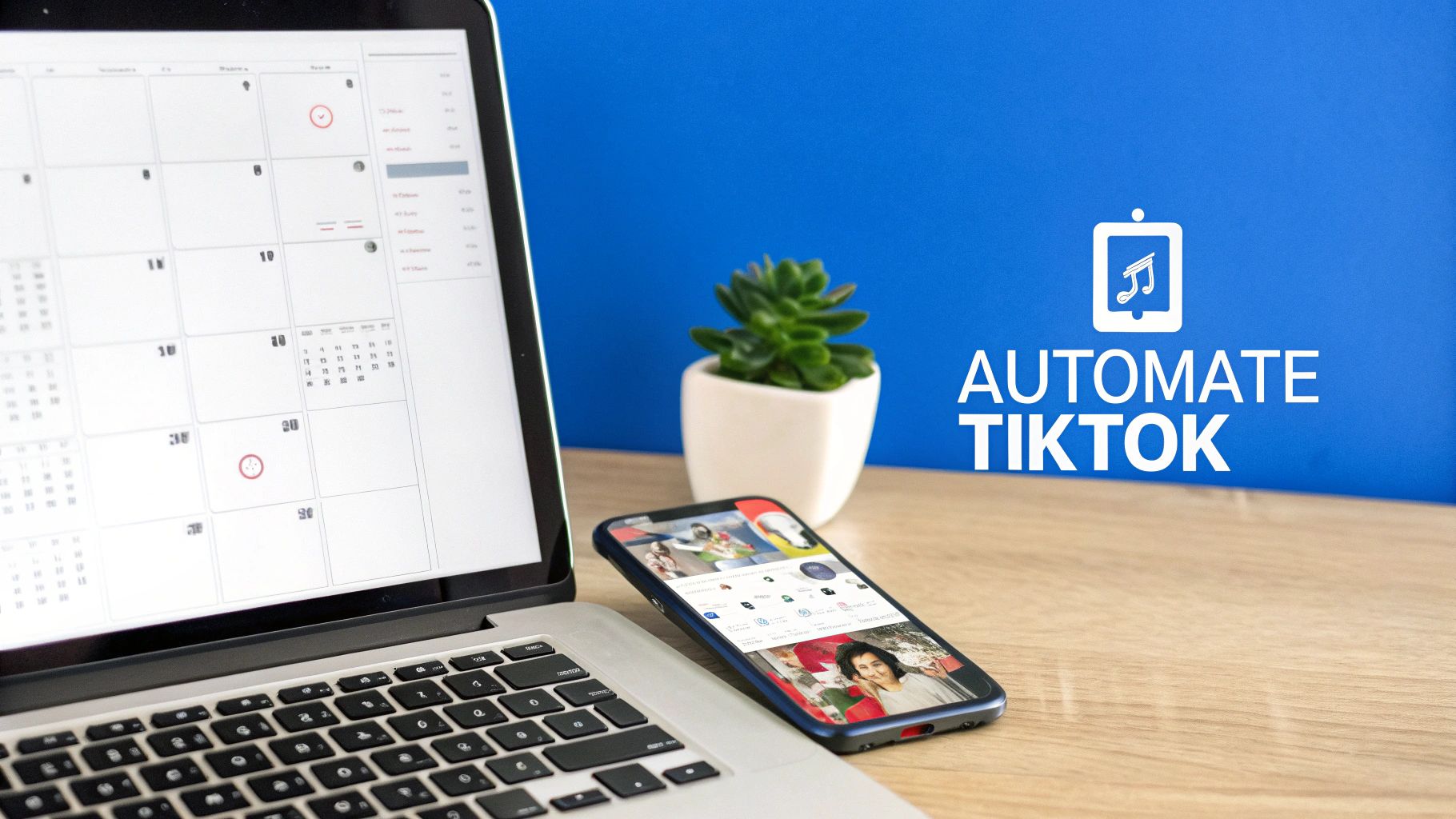
This kind of visual calendar gives you a bird's-eye view of your content pipeline, making it easy to stay consistent without any last-minute panic.
Just how much of a difference does this make? Let's break down the time savings with a side-by-side comparison.
Manual vs Automated TikTok Workflows A Weekly Comparison
This table shows just how many hours you can reclaim each week by switching from a manual grind to an automated system.
| Task | Time Spent (Manual) | Time Spent (Automated) | Weekly Time Saved |
|---|---|---|---|
| Idea & Scripting | 3-4 hours | 1 hour | 2-3 hours |
| Video Creation & Editing | 4-6 hours | 1-2 hours | 3-4 hours |
| Hashtags & Captions | 1-2 hours | 30 minutes | 0.5-1.5 hours |
| Scheduling & Publishing | 1 hour | 15 minutes | 45 minutes |
| Performance Analysis | 1 hour | 15 minutes | 45 minutes |
| Total Weekly Time | 10-14 hours | 3-4 hours | 7-10 hours |
The numbers don't lie. Recent analysis shows that creators can automate a staggering 60-75% of their typical TikTok tasks, from hashtag research to scheduling and reporting. Your weekly content creation time can plummet from 10-14 hours down to just 3-4. That’s a game-changer, allowing individual creators and small teams to punch way above their weight and compete with much larger operations.
Digging Into the Core Types of Automation
It's helpful to think of TikTok automation less like a single, all-in-one button and more like a specialist's toolkit. A good carpenter doesn't just have a hammer; they have tools for cutting, shaping, and joining. In the same way, automation platforms give you distinct tools to tackle specific parts of your content workflow. Figuring out what these tools are is the first real step to building a content machine that practically runs itself.
Each type of automation is designed to fix a different bottleneck in the content creation pipeline. Some are built for that initial creative spark, while others handle the nitty-gritty of getting your finished video in front of your audience. When you start combining them, you get a seamless process that hums along with very little hands-on effort from you.
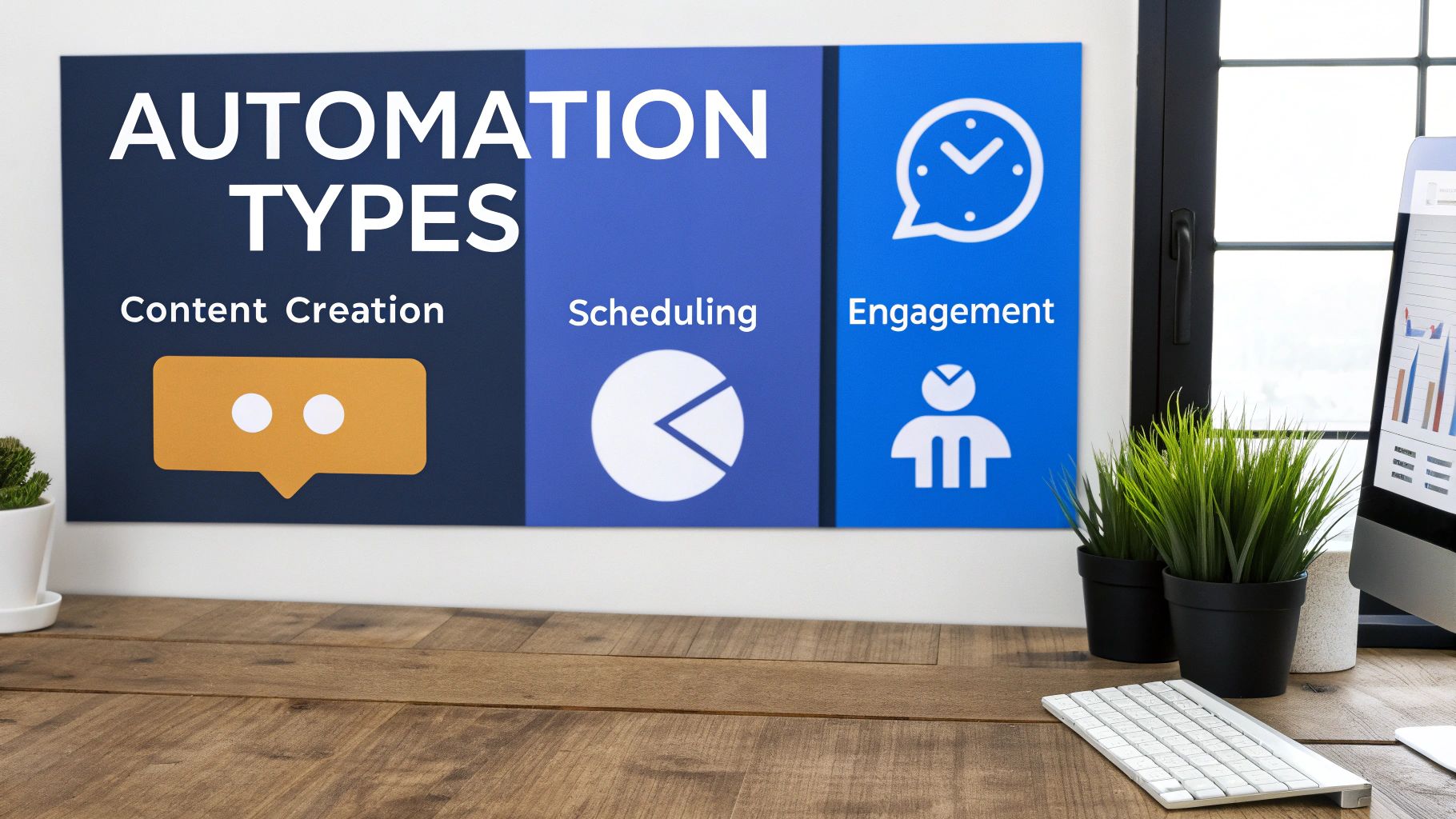
Let’s break down the four fundamental pillars of TikTok automation.
Content Creation Automation
This is where the real magic happens. Content creation automation uses AI to take on the most grueling parts of making a video: coming up with ideas, writing scripts, and even generating the visuals. It's like having a creative director and a video editor on call, 24/7.
Instead of staring at a blinking cursor, you can give the AI a simple prompt, a link to a blog post, or even a product description. From there, the system can spit out multiple video scripts, complete with hooks and scene ideas. Some of the more advanced platforms, like ShortsNinja, can go a step further and generate the entire video—visuals, voiceover, and captions included—from that one little idea.
This kind of automation is a total game-changer for anyone trying to produce content at scale. You can take a single long-form article and instantly spin it into a dozen unique video concepts, each with its own script and angle. Your content calendar will never be empty again.
Publishing and Scheduling Automation
Once your video is ready to go, the next hurdle is posting it at just the right time to get maximum eyeballs. This is where publishing and scheduling tools come in, taking all the guesswork and manual effort out of the equation. This is probably the most familiar form of TikTok automation—it’s essentially your personal content manager.
You can upload your finished videos in a batch, write out your captions, pop in your hashtags, and then schedule them to go live at specific dates and times. This is absolutely critical for maintaining the kind of consistent posting schedule that the TikTok algorithm loves. It also means you can reach audiences in different time zones without having to wake up at 3 AM to hit "post." If you want to dive deeper, we have a complete guide on automated TikTok posting.
The goal of scheduling automation is simple: ensure your content consistently reaches the right people at the right time, every single time.
That consistency does more than just please the algorithm; it builds anticipation with your audience and solidifies your brand's presence, turning casual scrollers into loyal followers.
Engagement and Community Automation
TikTok isn't a broadcast channel; it's a conversation. Engagement automation helps you stay on top of the constant flow of comments, messages, and mentions that come with a growing account. This one requires a careful touch to avoid sounding like a robot, but when done right, it can be incredibly powerful.
These tools can be set up to:
- Respond to keyword triggers: If someone messages you "SALE," an automated flow can instantly send them a link or a discount code.
- Answer frequently asked questions: Automatically handle common questions like "Where can I buy this?" or "What are your hours?" so you don't have to.
- Filter and flag comments: Some tools can help moderate your comments section by flagging potential spam or inappropriate content for you to review.
This makes sure your audience gets quick responses, which not only boosts engagement but makes them feel seen and heard.
Analytics and Reporting Automation
Finally, you can't improve what you don't measure. Analytics automation tools do the heavy lifting of pulling performance data from your account and organizing it into reports you can actually understand. Instead of manually logging views, likes, and shares for every single video, you get it all in one consolidated dashboard.
This kind of automation gives you a direct line into what’s actually working with your audience. You can spot your top-performing videos at a glance, figure out the best times to post, and get a clearer picture of who your followers are. This data-driven feedback loop is vital for tweaking your content strategy over time and making sure all your automated efforts are actually delivering real, measurable results.
The Strategic Benefits of Automating Your TikTok
Going beyond just saving a bit of time, TikTok automation is a serious growth multiplier that can give you a real competitive edge. Don't think of it as a shortcut. Think of it as a strategic investment in your content engine, allowing you to operate at a scale that’s simply out of reach when you’re doing everything by hand.
Automation is what lets you break through the ceiling of manual effort. A single person can only create so much content before burnout hits or the quality starts to slide. With an automated system, you can turn one solid idea into a dozen different videos, schedule posts weeks ahead of time, and keep a constant presence without being chained to your phone. It completely changes the game.
Achieving Unwavering Consistency
If there's one thing the TikTok algorithm loves, it's consistency. Posting on a regular schedule signals to the platform that you're an active, reliable creator. The reward? More visibility in the all-important "For You" feed. Automation makes this effortless.
By setting up a content pipeline, you can guarantee a steady flow of videos goes live at just the right times, keeping your audience hooked and the algorithm happy. This is the biggest hurdle for most creators and the main reason so many hit a growth plateau. If you're curious how this applies to other platforms, our guide on automated social media posting is a great read.
On a platform as massive as TikTok, this is non-negotiable. By 2025, TikTok is expected to have around 1.6 billion monthly active users, and the average engagement for business accounts is already a whopping 7.8%. With 71% of users saying they discover new products on the app, a consistent, automated strategy is the only way to capture that attention.
Making Smarter Data-Driven Decisions
Great automation isn't just about pushing content out; it's also about pulling insights in. Automated analytics tools give you a clear, real-time snapshot of what's hitting the mark and what's falling flat. Forget squinting at spreadsheets—you get reports that pinpoint your best-performing videos, peak engagement times, and who your audience really is.
This data-driven feedback loop is everything. It lets you double down on the content formats that are winning and quickly pivot away from the ones that aren't. Your efforts are always aimed at maximum impact.
The real magic of automation is that it doesn't just do the work—it gives you the insights to make everything you do next smarter and more effective.
To really get the most out of this, it helps to understand the core ideas behind mastering innovation in processes, which is what drives these huge efficiency gains.
Unleashing Your Creative Potential
One of the biggest myths about automation is that it kills creativity. In reality, it does the exact opposite. When you hand off the repetitive grunt work—scheduling, hashtag research, pulling analytics—to a machine, you free up your most precious resource: your creative brainpower.
Imagine a small e-commerce brand that went from posting twice a week to three times a day using an automated workflow. That massive jump in volume didn't hurt their quality. Instead, the team finally had time to brainstorm wild new campaign ideas and actually talk to their community. The result was explosive growth in both followers and sales. Automation didn't replace their creativity; it finally gave them the space to use it.
Navigating TikTok Policies and Automation Risks
Let's be clear: while TikTok automation can give you a massive leg up in scaling your content, it’s not the Wild West. Just jumping in without knowing the rules is like trying to drive a race car blindfolded—you’re probably going to crash and burn. The trick is understanding the difference between smart, policy-friendly automation and the kind of shady, black-hat tactics that will get your account shut down for good.
TikTok is obsessed with keeping the user experience authentic. They are constantly on the hunt for anything that fakes engagement or tries to game the algorithm. So, while using a third-party tool to schedule your posts is generally fine, firing up a bot to spam thousands of fake followers, likes, or comments is a one-way ticket to getting banned.
Understanding TikTok's Terms of Service
The platform's rules are all about protecting users from spam and phony behavior. Any tool promising "guaranteed followers" or using your account to auto-comment on thousands of videos is playing with fire. Your safest bet is sticking with reputable tools that use official APIs for tasks like scheduling.
To keep your account safe, you need to get familiar with the platform’s official rules. Here’s a look at TikTok's Terms of Service page, which spells out what's not allowed.
The screenshot gets right to the point: you can’t "engage in any commercial activities… without our express prior written consent." This is aimed squarely at unauthorized automation services that try to manipulate the platform. It’s a huge reminder to pick tools that play by TikTok’s rules.
The Hidden Risk of Inauthenticity
Getting banned is the obvious risk, but there's a quieter danger lurking: losing your human touch. Go too far with automation, and your brand can start to feel cold and robotic. If every comment you leave is identical or your AI-generated videos just don't have that spark, your audience will sniff it out in a second. That's the fastest way to kill the trust and connection you worked so hard to build.
Authenticity is everything on TikTok. People are there for genuine connection, and a robotic presence will turn them off faster than a bad algorithm update.
The real goal of TikTok automation isn't to replace your creativity—it's to amplify it. Treat automation like a tool that supports your strategy, not a substitute for real human oversight and engagement.
Best Practices for Responsible Automation
To protect your account and your brand, you need a strategy that balances efficiency with authenticity. The most successful creators don’t put their accounts on autopilot; they use automation like a super-powered assistant.
Stick to these rules to automate the right way:
- Always Review AI-Generated Content: Never, ever let an AI script or video go live without a human putting eyes on it first. A quick check for tone, accuracy, and brand fit can be the difference between a viral hit and a total cringe-fest.
- Choose Reputable Tools: Stick with well-known automation platforms that actually care about policy compliance. Look for services built for content creation and scheduling, not faking your engagement numbers.
- Prioritize Manual Engagement: You can automate your posting schedule, but you can't automate real connection. Make time to manually reply to comments and DMs. That’s how you build a loyal community that no bot could ever replicate.
Your Automated Workflow From Idea to Video
So far, we’ve covered the what and the why. Now, let’s get into the how. It’s time to see what a fully automated content pipeline actually looks like, from a simple thought to a finished video ready to go live. This isn't just theory—it's the practical blueprint for creating content with as little hands-on work as possible.
Imagine a digital assembly line. Each step seamlessly hands off its completed work to the next, turning a raw idea into a polished, scheduled TikTok. Let's walk one concept through this four-step journey to see how a hands-off content machine really works.
Step 1: Automated Idea Generation
The whole thing kicks off not with a blank page, but with a smart prompt. Forget doom-scrolling the "For You" page for inspiration. Instead, you feed an AI tool a core topic, a link to a blog post, or just a few keywords from your niche.
The AI gets to work immediately, scanning current trends, search data, and top-performing video formats related to your input. In moments, you get a list of potential video ideas, complete with hooks and angles engineered to stop the scroll. For example, a simple prompt like "benefits of intermittent fasting" could spit out ideas like "3 myths about fasting you totally believe" or "The #1 mistake people make when starting IF."
This first step alone can save you hours of brainstorming and makes sure your content is actually something people want to watch.
Step 2: AI-Powered Scripting and Asset Creation
Once you’ve picked an idea you like, the next automated stage kicks in. The system uses your chosen concept to write a complete video script. And I don't mean a boring wall of text. It's a structured outline with clear scenes, calls to action, and timing built for short-form video.
At the same time, the AI is already hunting for visuals. Based on what’s in the script, it pulls in relevant stock footage, generates AI images, or creates simple animated graphics to match each scene. The system gets the context, so a line about "financial growth" will get paired with visuals of charts or upward-trending graphs. It builds a cohesive story without you lifting a finger.
This combo of scripting and asset sourcing is the real heart of the content engine. It takes an abstract idea and turns it into the actual building blocks of a video in minutes, not hours.
Step 3: Automated Video Assembly
With the script and visuals ready to go, the final creation phase begins. This is where a platform like ShortsNinja steps in, taking all those components and stitching them together into a finished video.
Several things happen all at once, automatically:
- Voiceover Generation: A realistic AI voice reads the script aloud. You can even choose from different languages and accents.
- Visual Synchronization: The AI places the images and video clips onto the timeline, syncing everything perfectly with the voiceover.
- Caption Overlay: Dynamic, engaging captions are generated and burned right into the video.
- Music and Effects: The platform layers in royalty-free background music and adds simple transitions to give it a professional finish.
What you're left with is a video that’s ready to publish, only needing a quick final look-over from you for any small tweaks.
This is all part of a larger trend where platforms are embracing automation from start to finish. TikTok itself is investing heavily in AI to help brands connect creative content with their ad buying and measurement. And it makes sense—with 92% of users taking action after watching a video, tools that speed up creative production are becoming a must-have for marketers. You can read more about TikTok's latest advertising updates here.
Step 4: Smart Scheduling and Publishing
The final piece of the puzzle is getting your new video in front of your audience. The automation tool analyzes your account’s past performance to pinpoint the absolute best times to post for maximum engagement.
Then, the system writes a compelling caption, finds and adds a list of relevant, high-traffic hashtags, and schedules the video to go live. You can literally create weeks' worth of content, load it into the scheduler, and let the platform do the rest. Your account stays active and consistent, feeding the algorithm and growing your audience—even when you’re not online.
A responsible workflow balances this power with oversight, making sure you stay compliant and protect your brand.
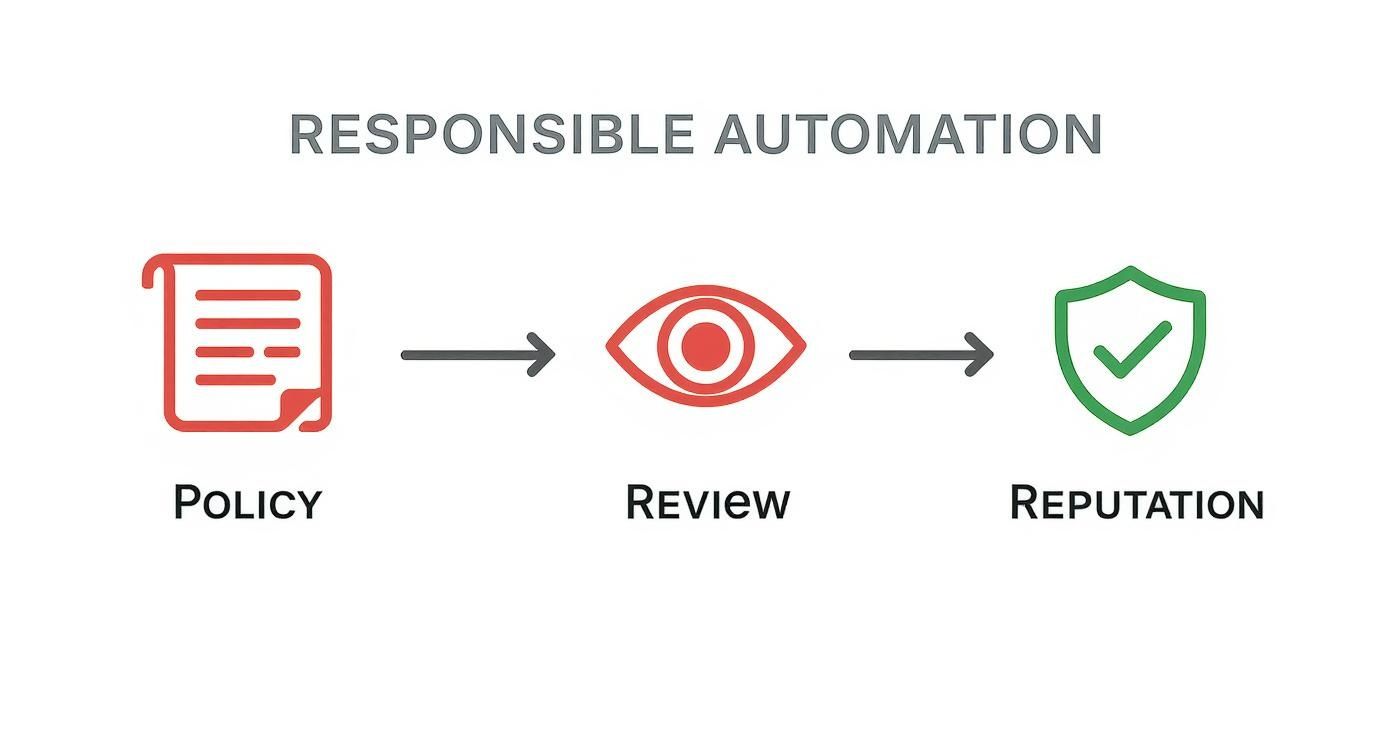
This blueprint makes it clear: successful automation still needs a human touch for review. That final check ensures every piece of content aligns with platform policies and safeguards your hard-earned brand integrity.
Choosing the Right TikTok Automation Platform
With so many tools promising to automate your TikTok, picking the right one can feel like a shot in the dark. It’s a big decision. The platform you choose can either supercharge your growth or become just another subscription you forget to cancel. You have to look past the slick landing pages and really dig into the features that will solve your specific problems.
Think of it like hiring a team member. A simple scheduler is like an intern who just posts when you tell them to. But a brand aiming for serious scale needs a seasoned producer—someone who can handle the entire workflow. Your choice should directly tackle your biggest headaches, whether that’s coming up with ideas, actually making the videos, or just getting them posted on time.
What to Look for in a TikTok Automation Tool
To cut through the noise, you need a clear checklist. The best platforms don’t just automate one small task; they streamline your entire content engine, taking you from a rough idea to a published video without all the usual friction.
Here are the non-negotiables:
- AI Content Generation: A true automation tool does more than just schedule. It should be your creative partner, capable of generating video ideas, writing scripts that actually sound good, and even creating the visuals and voiceovers for you.
- An Interface You'll Actually Use: What’s the point of automation if the dashboard is a cluttered mess? The best tools have a clean, intuitive workflow that makes creating and scheduling content feel easy, not like a chore.
- Smart Scheduling Features: Basic scheduling is the bare minimum. Look for advanced options like batch scheduling, timezone support, and—most importantly—recommendations on the best times to post based on your actual audience data.
- Analytics That Make Sense: You can't improve what you can't measure. The tool needs to give you clear, actionable data on video performance, follower growth, and engagement, so you can see what’s working and double down on it.
When weighing your options, it's also smart to see how pros in other fields evaluate their tools. The core principles for choosing secure marketing automation tools, for example, apply here too—you need something reliable, powerful, and safe.
Here's a quick reference table to help you evaluate platforms.
Essential Features in a TikTok Automation Tool
This checklist will help you evaluate and choose the right automation platform for your specific needs and goals.
| Feature Category | Core Functionality | Why It's Important |
|---|---|---|
| Content Creation | AI scriptwriting, voiceover generation, visual creation | This is the core of true automation. It turns a multi-hour process into a few minutes, drastically increasing your output. |
| Workflow & UX | Intuitive dashboard, simple step-by-step process | A confusing interface defeats the purpose of automation. It should feel effortless to create and manage content. |
| Publishing | Batch scheduling, timezone support, optimal time suggestions | Smart scheduling maximizes reach and engagement by posting when your specific audience is most active. |
| Analytics | Performance tracking, follower growth, engagement metrics | Actionable data helps you understand what content resonates, allowing you to refine your strategy and grow faster. |
| Integration | Direct publishing to TikTok, access to stock media libraries | Seamless integration saves time and avoids the hassle of downloading and re-uploading videos manually. |
Ultimately, the best tool is the one that addresses your biggest bottleneck and fits naturally into your workflow.
Putting It All Together: A Real-World Example
Let's look at how a platform like ShortsNinja solves these common problems in practice. For most creators, the biggest issue is time. Scripting, finding visuals, recording a voiceover, and editing a single video can easily eat up hours.
A powerful automation platform collapses this entire multi-hour process into a few minutes. It acts as a force multiplier, giving a single creator the output capacity of a small content team.
This is where ShortsNinja shines. It integrates all those essential features into one smooth process. You can start with just a keyword, and the AI will generate a script. From there, it automatically pulls together visuals and creates a natural-sounding voiceover, building a video that’s about 90% complete.
All you have to do is make a few quick tweaks before dropping it into the smart scheduler. This directly tackles the biggest bottleneck for creators: the sheer time and effort of production. When you choose a tool that solves your primary challenge this effectively, you see a clear return on your investment almost immediately.
Got Questions About TikTok Automation? Let's Clear Things Up.
Diving into TikTok automation brings up some fair questions. Is it safe? Does it actually work? What’s it going to cost me? These are the right things to be asking, so let's get you some straight answers.
Is This Going to Get My Account Banned?
This is the big one, and it’s a great question. The answer boils down to what kind of automation you’re using. TikTok’s rules are very clear: they hate bots that fake engagement. Anything that auto-likes, auto-follows, or drops spam comments is a fast track to getting your account shut down.
But that's not what we're talking about here. Reputable automation platforms focus on content creation and scheduling. They help you make your videos, not fake your popularity. Think of them as a production assistant, not a bot army. As long as you stick to tools that streamline your creative workflow, you’re playing by the rules.
The rule of thumb is simple: If a tool promises fake fans, run. If it promises to make your work easier, you're on the right track.
Can AI Really Make Videos People Want to Watch?
It's a good point—can a machine actually have a great idea? The best way to think about AI is as a super-powered assistant, not a creative director. You still need to be the boss. An AI can whip up a script or find the perfect visuals in seconds, but it's your vision that brings it all together.
You provide the spark—the core idea. You review what the AI puts together and add your unique personality or brand voice. That human touch is what turns a technically solid video into something people genuinely connect with. The AI does 90% of the heavy lifting, freeing you up to nail the final 10% that makes all the difference.
How Much Do These Tools Cost, Really?
The price tags on automation tools vary, but most run on a monthly subscription. You'll usually see different tiers based on how many videos you plan to make. But here's a better way to look at it: stop thinking of it as a cost and start seeing it as an investment in getting your time back.
Do a quick calculation. How many hours are you spending making videos right now? If a $50/month tool saves you 10 hours of work, you’re basically buying your time back for $5 an hour. For most creators and brands, the time saved and the ability to post more consistently makes the math a no-brainer.
Ready to see how an AI-powered workflow can completely change your content game? ShortsNinja turns hours of video production into a simple, five-minute process. Generate scripts, visuals, and voiceovers instantly and schedule everything without leaving the platform. Start your free trial and build your content machine today!