

Yes, YouTube automation is absolutely legit—but probably not in the way you're thinking. Forget the get-rich-quick schemes. Think of it less like a magic money button and more like building a highly efficient assembly line for your videos.
What YouTube Automation Really Means
Let's clear the air. The term "YouTube automation" has been hijacked by scammers promising viral videos with zero effort. That’s the myth.
Real YouTube automation is just the process of systemizing and delegating the tasks needed to run a channel. It lets your channel operate and grow without you having to personally handle every single step.
You’re essentially shifting your role from a solo creator—who does everything—to a business owner who oversees a production workflow. Instead of one person brainstorming, scripting, recording, editing, and uploading, you build a system of human freelancers or AI tools to handle each part.
This strategic delegation is what makes it work. A successful automated channel isn't "hands-off"; it's a well-oiled machine where specialists tackle specific pieces of the content puzzle.
The Content Assembly Line
Ever seen a car factory? No single person builds a car from the ground up. There's a streamlined process where each station adds a specific part. Legitimate YouTube automation applies that exact same logic to making videos. The workflow gets broken down into clear, manageable stages.
This diagram shows the classic workflow for producing a video within an automated system.
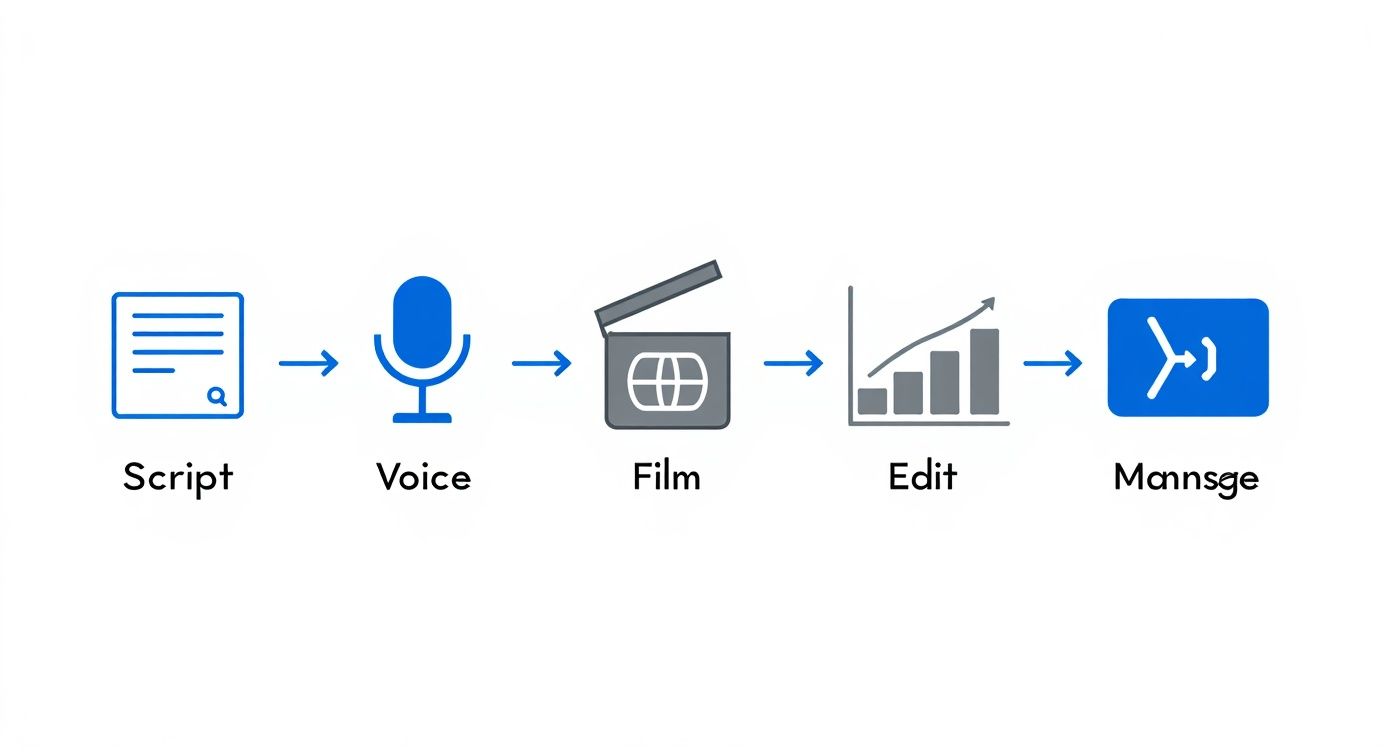
Each step, from scripting to the final upload, represents a role that you can either outsource to a person or enhance with technology.
This model is what allows for consistent output at scale, which is exactly what you need to get traction with the YouTube algorithm. Your main job transforms from being the on-camera talent to being the producer who manages quality control and sets the channel's direction.
Key Takeaway: Legitimate YouTube automation isn't about finding shady shortcuts. It's about building an efficient, scalable, and repeatable content creation process that treats your channel like a real media business.
The system relies on a simple division of labor:
- Scriptwriters: They craft compelling scripts based on your content strategy.
- Voiceover Artists: They provide the narration, giving the channel its unique sound.
- Video Editors: They piece together stock footage, animations, and graphics into a polished video.
- Channel Managers: They handle uploads, optimization (titles, descriptions, tags), and community interaction.
When someone asks, "is YouTube automation legit," the answer truly boils down to this distinction. If you’re building a system to produce original, valuable content more efficiently, you're doing it right. If you're looking for a bot to steal and re-upload other people's videos, you're heading straight for a channel ban.
The Difference Between Legitimate and Scammy Automation

So, is YouTube automation legit? The answer is a classic "it depends"—specifically, on how you do it.
Think of it like two different restaurants. One builds its reputation from the ground up, using quality ingredients and skilled chefs to create original dishes. The other just steals popular recipes and serves microwaved food, hoping to make a quick buck before they get shut down.
Both are technically in the business of selling food, but only one is building a real, sustainable brand. This is the perfect analogy for YouTube. The line between a valuable media asset and a banned channel comes down to your respect for four key principles.
The Four Pillars of Legitimacy
To build a channel that lasts, your automation strategy needs to stand firmly on these four pillars. If even one of them crumbles, your entire operation is at risk.
-
Legal Compliance: This is the big one, and it’s all about copyright. A legitimate channel uses properly licensed stock footage, music, and other assets, or it creates completely original content. Scammy channels just rip clips from other creators, inviting copyright strikes and potential legal action.
-
Platform Policy Adherence: YouTube has a rulebook, and they expect you to follow it. The platform cracks down hard on spam, deceptive practices, and reused content. Legit channels focus on producing unique videos that give viewers something valuable. Scammy ones use bots to fake engagement or re-upload slightly altered videos from elsewhere—both are fast tracks to getting your channel deleted.
-
Ethical Standards: This comes down to originality and honesty. Are you actually creating something new, or are you just repackaging what’s already out there? Ethical automation is about serving an audience with fresh content. Unethical methods are all about trying to trick the algorithm with low-effort, derivative material.
-
Financial Realism: A real automated channel is a business investment that grows over time. Scammers, on the other hand, promise you’ll get rich overnight, usually by selling you an overpriced course full of generic advice. If it sounds too good to be true, it always is.
Legit vs Scammy YouTube Automation Tactics
The real difference between "white-hat" (legit) and "black-hat" (scammy) tactics is in the execution. Today's YouTube ecosystem is smarter than ever. We know that channels posting three or more times a week can get 2.7 times more recommendations, but you can't sacrifice quality or compliance for speed. In fact, roughly 65% of recent platform restrictions were linked to non-compliant automation tools, which shows just how seriously YouTube takes this. You can get more details on staying compliant from resources like Thunderbit.
Key Takeaway: True automation is about scaling original content production, not plagiarizing it. The goal is to build a brand, not just farm for clicks.
To make the distinction crystal clear, it’s helpful to see the good and bad tactics side-by-side.
Legit vs Scammy YouTube Automation Tactics
This table breaks down the common approaches that separate the pros who build lasting channels from the rule-breakers who get shut down.
| Area of Focus | Legit White-Hat Automation ✅ | Scammy Black-Hat Automation ❌ |
|---|---|---|
| Content Sourcing | Uses licensed stock footage, hires creators, or generates original AI visuals. | Steals clips from other YouTube videos or TV shows without permission. |
| Video Production | Creates unique scripts and combines assets into a new, valuable video. | Re-uploads existing content with minor edits (e.g., mirrored video, new music). |
| Engagement Strategy | Focuses on creating high-quality content that earns genuine views and subs. | Uses view-bots or sub-for-sub schemes to inflate numbers artificially. |
| Monetization Goal | Aims for sustainable, long-term revenue through AdSense and brand deals. | Seeks rapid, short-term cash grabs before the channel is inevitably banned. |
Ultimately, a white-hat approach treats YouTube automation as a tool to build a genuine media business. A black-hat approach treats it as a loophole to be exploited for a quick payout, and those loopholes always close eventually.
Your Toolkit for Smart YouTube Automation
Getting into YouTube automation is like setting up a digital workshop. Instead of hammers and saws, you're stocking up on AI-powered software designed to handle specific parts of the content creation process, turning a simple idea into a finished video.
This isn't about finding one magical program that does everything. It's about building a "stack" of specialized tools that work together like a well-oiled assembly line. Each tool takes on a different stage—from scripting and voiceover to the final edit—so you can pump out content consistently.
The Core Components of an Automated Workflow
A typical automated channel runs on a few key types of software. Each piece is designed to take over a manual, time-sucking task, which is the whole point of building a smart system in the first place.
- AI Scriptwriters: Tools like Jasper or Copy.ai can take a basic prompt and flesh it out into a structured video script. They're fantastic for getting a first draft on paper and can save you hours of writing and research.
- AI Voice Generators: Platforms such as Murf.ai or ElevenLabs use some seriously impressive text-to-speech tech to create natural-sounding voiceovers. This completely sidesteps the need for pricey recording gear or hiring voice actors.
- Stock Footage Libraries: Services like Storyblocks and Envato Elements are treasure troves of royalty-free videos, images, and music. For most faceless channels, these are the visual building blocks.
- AI Video Editors: Editors like InVideo or Pictory can assemble an entire video from just a script. They analyze the text, pull relevant stock clips, and sync them with the AI voiceover, handling what is easily the most tedious part of production.
The Critical Distinction: Smart automation is about using these tools to enhance human creativity, not replace it. Using an AI script for inspiration is a huge time-saver. Copy-pasting it without a second thought is how you end up with generic, soulless content that viewers will click away from in seconds.
Using Tools Without Becoming a Robot
The biggest trap you can fall into with this toolkit is churning out soulless, repetitive videos that get you flagged by YouTube's "reused content" policy. To stay clear of that, your final touch is everything. You have to add unique value by refining AI scripts, hand-picking visuals that truly tell a story, and making sure the final edit has a human feel.
To get started, it's worth researching the best AI automation tools on the market. Understanding what's out there helps you pick software that actually fits your niche and quality standards. By keeping your focus on originality, you can answer the question "is YouTube automation legit" with a confident "yes."
And for a closer look at the specific software making waves, check out our complete guide on the top YouTube automation tools that successful creators are using right now.
Understanding the Real Earning Potential
Let’s cut through the hype and talk real numbers. You’ve probably seen the flashy promises of overnight fortunes, and honestly, that’s the biggest red flag in this entire space. While YouTube automation is a perfectly legitimate business model, its earning potential is grounded in market realities, not magic formulas. Your income isn’t guaranteed—it’s a direct result of smart, strategic decisions.
The single most critical factor is your niche selection. This one choice dictates your channel's potential ad revenue, which we measure in CPM (Cost Per Mille), or how much advertisers are willing to pay per 1,000 views. For example, a channel focused on personal finance might pull in a CPM of $15-$30. Meanwhile, a gaming clips channel could be stuck with a CPM as low as $1-$5.
Key Takeaway: Choosing a high-CPM niche is non-negotiable for maximizing AdSense revenue. A finance channel with 100,000 views can easily out-earn a meme channel with a million views.
This means that chasing viral trends in low-value topics is often a losing game. The real money is made by serving specific, valuable audiences that advertisers are desperate to reach.
Beyond AdSense: Diversifying Your Income
Relying solely on YouTube AdSense is a rookie mistake. The truly profitable automated channels build multiple income streams that feed into each other, creating a much more stable and resilient business.
Here’s what that looks like in practice:
- Affiliate Marketing: This is a big one. You recommend products or software relevant to your niche and earn a commission on every sale. Think of a tech review channel earning hefty commissions from affiliate links to the gadgets it features.
- Sponsorships and Brand Deals: Once your channel gains traction, brands will pay you directly to feature their products or services. These deals can often blow your AdSense earnings out of the water.
- Selling Your Own Products: This is where you take full control. Creating your own merchandise, e-books, or online courses gives you a direct revenue stream that isn't dependent on anyone else.
This kind of diversification is essential. Many of the most successful creators, especially those who run faceless channels, have mastered these methods. If you're curious, you can learn more in our detailed guide on how to earn money on YouTube with faceless videos.
The Competitive Landscape
The market is definitely competitive, but it's far from saturated. In 2025, YouTube’s massive global user base of 2.85 billion still presents a huge opportunity. While some automated channels are pulling in a few hundred dollars a month, others are generating tens of thousands.
The difference? The successful ones effectively combine a high-value niche, quality content, and a diverse monetization strategy. Success hinges on targeting underserved audiences and consistently delivering value—not just automating for the sake of it.
How to Protect Your Channel from Costly Mistakes
Think of your YouTube channel as a business asset. Navigating the world of automation means you're the one in charge, and it's your job to steer clear of the icebergs that can sink your channel overnight. When you ask, "is YouTube automation legit," the answer really comes down to how well you manage these risks.
Three major threats can completely derail your progress.
The first is demonetization due to reused or repetitive content. YouTube's algorithm is built to reward originality. If your videos are just a sloppy mashup of stock footage with a generic AI voiceover and no unique story, the platform will flag it. This doesn't just cut off your earnings; it signals to the algorithm that your content isn't valuable, crushing your reach.
Next up is the constant danger of copyright strikes. A single improperly sourced image, music track, or video clip can land a strike against your channel. Get three, and your channel is gone for good—no appeals, no second chances. This is probably the most common reason you see automated channels suddenly disappear from the platform.
Your Channel Protection Checklist
The biggest risk of all? Total channel termination. This is the end result of repeated copyright issues or violating YouTube's Terms of Service, like using bots for fake engagement. Buying views or subscribers is a surefire way to get your channel deleted and your entire investment wiped out.
To keep your channel safe and growing, you have to treat it like a professional media asset. That means following a strict safety checklist for every single video you produce.
Key Insight: Your long-term success isn't about how fast you can churn out videos, but how consistently you can produce them safely. Every shortcut you take just multiplies your risk of a fatal mistake.
Follow these rules without exception to protect your hard work:
-
Ensure Transformative Value: Never just stitch together stock clips with an AI voice. Your script, your editing, and your narrative must add something new. Ask yourself: "Does this video offer value beyond the sum of its parts?" If the answer is no, you're in the danger zone for reused content. Understanding the latest YouTube Shorts monetization requirements can give you a better idea of what YouTube is looking for.
-
Verify Every Single Asset: Assume nothing is free to use. Stick to reputable stock footage sites with clear commercial licenses. To really protect your channel, it's critical to know how to check if an image is copyrighted before it ever ends up in your video. Keep detailed records of your licenses for music and footage, just in case you ever need to dispute a claim.
-
Reject Fake Engagement Tactics: Never, ever buy views, subscribers, or comments. The YouTube algorithm is incredibly smart and can easily spot this kind of manipulation. Building an audience the right way is slower, sure, but it's the only way to build a sustainable channel that won't get shut down.
Frequently Asked Questions About YouTube Automation

Even after breaking down the basics, you probably still have some nagging questions about how this all works in the real world. Let's cut through the noise and tackle the big concerns head-on.
This is where we get into the practical, legal, and financial stuff every creator needs to think about before jumping in.
Is YouTube Automation Legal
Yes, the core business model of hiring people or using tools to create video content is completely legal. At its heart, you're running a small media company—you're just the producer organizing the talent and resources.
The trouble starts when you cut corners. Legality flies out the window if you're stealing someone else's footage, using music without a license, or otherwise engaging in copyright infringement.
A legitimate YouTube automation channel is built on respecting intellectual property and following YouTube’s rules. Do that, and you'll stay on the right side of the law.
Can I Start YouTube Automation with No Money
Technically, yes, but it’s incredibly difficult and kind of defeats the whole purpose. If you're doing all the work yourself—the scripting, voiceover, and editing—you're not really automating. You're just being a regular YouTuber.
True automation is about building a system, and that means outsourcing tasks to freelancers or using paid software to do the heavy lifting. A realistic start requires at least a small budget to get the essential pieces in place.
Most successful automated channels treat it like a real business from day one, which means making a smart investment in either good people or good software.
Trying to build a scalable, automated channel without spending a dime is a recipe for burnout.
How Long Does It Take to See Results
There's no magic number here, and you should run from anyone who promises you'll be monetized in 30 or 90 days. Building a channel from nothing is a slow grind that requires a ton of patience.
It often takes several months of consistent, quality uploads—think 30-50 videos—before the YouTube algorithm really starts to notice your channel and give it a push.
Hitting the monetization milestones of 1,000 subscribers and 4,000 watch hours can take anywhere from six to twelve months, sometimes even longer, depending on your niche and how good your videos are.
When people ask, "Is YouTube automation legit?" the answer is tied to this timeframe. Real businesses take time to grow. Promises of overnight success are almost always a scam. It's a marathon, not a sprint, and it demands a long-term commitment to creating stuff people actually want to watch.
Ready to create amazing short-form videos without the endless hours of editing? ShortsNinja uses AI to turn your ideas into engaging, faceless content for TikTok and YouTube in just minutes. Build your content assembly line the smart way. Start your journey and claim your free trial video today at https://shortsninja.com.