
Ever find yourself staring at a blank screen, wondering how to make a TikTok video that people actually want to watch? It’s a common roadblock. This guide is built to get you past that, breaking down the entire process from a flicker of an idea to a fully optimized, published video. We're going beyond generic tips to give you a repeatable workflow you can use to consistently create content that builds a real audience.
Your Blueprint for Creating Viral TikToks
Think of this guide as your personal roadmap to creating TikTok content that hits your goals, whether you’re flying solo as a creator, managing accounts for a marketing agency, or growing your own small business. We’ll cover everything—from brainstorming ideas that connect and scripting them for impact, all the way to production. You'll learn the ropes of filming yourself or, if you prefer, using powerful AI tools like ShortsNinja to create amazing faceless content in minutes.
The real goal here is to move past the one-off video and build a sustainable system for creating content. This simple, three-stage workflow is the foundation of it all.
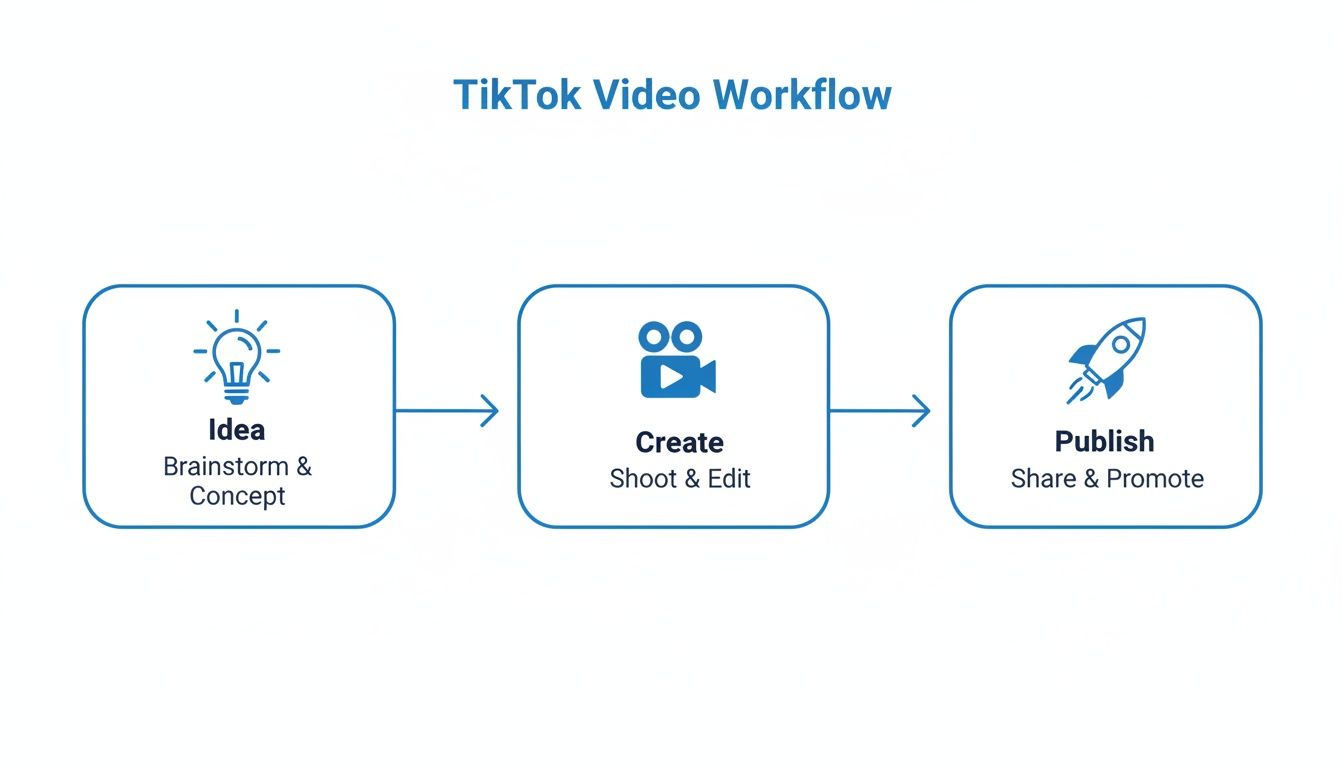
This Idea → Create → Publish process is the backbone of every single successful TikTok strategy I've seen. It’s what turns chaotic, last-minute posting into a streamlined, low-stress operation.
Why a System Matters More Than a Single Viral Hit
To really get how to make a TikTok video, you have to appreciate the sheer scale of the platform. An estimated 34 million videos get uploaded every single day. Standing out isn't just about one good idea; it's about consistency.
It's a huge miss for so many brands. They struggle to post, averaging maybe 1.7 times per week, while the top accounts are pushing out content more than five times a week.
That gap? That’s your opening.
AI-first workflows were practically built to close this gap. For instance, a system like ShortsNinja’s “idea → script → AI visuals → quick edit → schedule” loop takes what used to be hours of painstaking work and shrinks it down to about five minutes per video. That kind of efficiency means you can finally match the posting frequency of top-tier accounts without completely burning out.
To give you a bird's-eye view, here's a quick breakdown of the workflow we'll be diving into.
The TikTok Video Creation Workflow At a Glance
This table sums up the core stages of producing a high-performing TikTok video, from the initial concept all the way to hitting that publish button.
| Stage | Key Objective | Time-Saving Tip |
|---|---|---|
| Idea | Find a concept that resonates with your target audience. | Use trend-spotting tools or AI idea generators to skip the blank-page paralysis. |
| Create | Produce the video (script, film/generate visuals, edit). | Batch-create your content. Film or generate visuals for multiple videos in one session. |
| Publish | Optimize with hooks, captions, hashtags, and schedule. | Use a scheduling tool and create templates for your captions and hashtag sets. |
By breaking it down like this, the process feels a lot less intimidating and way more achievable on a consistent basis.
A repeatable process frees you up. Instead of constantly worrying about what to post next, you can focus your energy on building a library of high-quality content that works for you around the clock.
Mastering the TikTok Algorithm
Here's the other big win: a repeatable workflow helps you work with the TikTok algorithm, not against it. The algorithm loves accounts that post consistently and get steady engagement. When you can create content efficiently, you can test more—more formats, more sounds, more topics—to see exactly what your audience responds to.
This data-driven approach is the secret to real growth. Understanding what the algorithm wants to see is just as important as the video itself. To get a much deeper look at this, I highly recommend our guide that explains how the TikTok algorithm works.
When you combine a smart workflow with a solid understanding of the platform, you're not just making videos anymore. You're building a powerful engine for audience growth.
Finding Ideas and Scripting for Engagement
A viral TikTok doesn't just happen by accident. It all starts with a solid idea and a script that's built from the ground up for the "For You" page. This is the foundation—where you figure out what your video is actually about and how you'll tell that story in 60 seconds or less.
The sweet spot is finding that perfect intersection of what's currently trending and what feels genuine to your niche.

Before you even think about hitting that record button, you need to put on your detective hat and become a student of the platform. Spend some real time scrolling your feed, but do it with a purpose. What sounds are you hearing over and over? What video formats or challenges keep popping up in your niche? This isn't about blindly copying someone else's video; it's about learning to speak the current language of TikTok.
Your goal is to find a trend you can adapt, not just replicate.
Finding Your Next Great Idea
Honestly, the best ideas often come from just listening to the conversations already happening. Stop looking for the next viral dance and start paying attention to the recurring questions, common frustrations, or mind-blowing facts that people in your community are talking about.
Here are a few goldmines for your next video concept:
- The TikTok Search Bar: Start typing keywords related to your niche and watch what suggestions pop up. This is a direct pipeline into what real users are searching for right now.
- Competitor Comments: Go lurk in the comment sections of popular videos in your space. What are people confused about? What questions keep getting asked? Boom. That's your next video idea, handed to you on a silver platter.
- Trending Sounds: Dive into the Creative Center in your TikTok profile to see which audio clips are about to take off. A trending sound can be the perfect Trojan horse to deliver your message to a massive new audience.
Once you’ve landed on a concept, it’s time to script it out. I know, "scripting" sounds formal, but even a quick 15-second clip needs some structure. Without a plan, it's way too easy to ramble and lose your viewer's attention before you get to the good stuff.
Structuring Your Script for Retention
Every killer TikTok script has three essential parts: the hook, the value, and the call-to-action (CTA). You have less than three seconds to convince someone not to scroll past, which makes your hook the single most important sentence you'll write all day.
Pro Tip: Your hook needs to either spark intense curiosity or make a bold claim. Instead of a boring intro like, "Today I'm going to show you how to organize your kitchen," try something punchier: "Your kitchen is organized all wrong, and I'm about to show you why." See the difference?
The middle of your script is where you deliver the goods—the tips, the story, the solution. Keep it snappy and fast-paced. Use quick cuts, on-screen text, and visuals to keep the energy high.
Finally, wrap it up with a crystal-clear CTA. Tell the viewer exactly what you want them to do next. Something simple like, "Comment your favorite tip below," or "Follow for part two" works perfectly.
If you're still getting the hang of this, our guide on script writing for beginners is packed with practical templates to get you moving. Seriously, one of the best things you can do is create a simple script template for your go-to video formats. It'll save you a ton of time and make sure every single video you post has a clear purpose.
Creating Your Video with AI or a Camera
With your script locked in, it’s time to actually make the video. This is where the magic happens, and you have two main paths to choose from: stepping in front of the camera yourself or letting AI do the heavy lifting.
Both approaches can get you a killer TikTok video, but they’re suited for totally different workflows and creative styles.
Let's start with the classic way: filming yourself. This is the go-to method if you're building a personal brand, making vlogs, or showing off physical products. You don't need a pro setup to make it look good, but getting the fundamentals right is key.
The Traditional Filming Route
Forget the Hollywood budget. Your smartphone is more than enough to shoot high-quality footage as long as you nail three things: lighting, sound, and stability.
- Lighting is Everything: Natural light is your absolute best friend. Seriously. Just face a window, and you’ll get soft, flattering light that makes you look great. If you have to film at night, a basic ring light is a game-changer for getting rid of those harsh shadows.
- Crisp Audio Matters: People will put up with slightly grainy video, but they will click away instantly if the audio is terrible. The mic on your headphones is a decent start, but a cheap lavalier mic that clips to your shirt will make you sound 10x more professional.
- Keep it Steady: Nobody likes shaky cam. It just looks amateur. Prop your phone up on a stack of books or grab a small, affordable tripod. This simple fix makes your shots look clean and keeps the focus where it should be—on you and your content.
The big upside to filming yourself is that direct connection you build with your audience. The downside? It's time-consuming. You’ve got setup, multiple takes, and the need to feel comfortable on camera.
The AI-Powered Faceless Approach
But what if you hate being on camera? Or you're just slammed for time and want to pump out content at scale? This is where AI-powered video creation completely changes the game.
This modern workflow is perfect for creating "faceless" videos that are every bit as engaging as the ones with people in them.
Tools like ShortsNinja have made this ridiculously easy. You can feed it your script, and the AI will generate stunning, relevant visuals using models from places like Luma Labs and RunwayML. It’s a massive shortcut for anyone wondering how to make a TikTok video without all the filming headaches. Our guide on using an AI TikTok video maker goes way deeper into how this tech works.
Just remember, the quality of what you get out of AI depends on the quality of your instructions going in. Getting good at AI Prompt Engineering can make a huge difference in how your final video clips turn out.
Comparing Production Methods
So, which way should you go? It really comes down to your goals, your resources, and what you're comfortable with. Neither method is "better"—they just serve different strategies.
| Feature | Traditional Filming | AI-Powered Generation |
|---|---|---|
| Speed | Slow; requires setup and retakes | Fast; generates visuals in minutes |
| Scalability | Low; limited by your time | High; can produce many videos quickly |
| Personal Brand | Excellent for building a face-to-face connection | Ideal for faceless, topic-focused brands |
| Equipment | Requires camera, lighting, and microphone | Requires only a computer and software |
At the end of the day, the best production method is the one that lets you create great content consistently. Whether you’re setting up a tripod or typing a prompt, the goal is the same: turn your script into a scroll-stopping story.
Editing and Sound Design for Maximum Impact
This is where the real magic happens. Your raw footage or AI clips are just the ingredients; the edit is where you cook them into a compelling story that stops people from scrolling.
Once you have your clips ready, it's time to stitch them together. If you want a deep dive into specific techniques, these essential TikTok video editing tips are a great place to start. But don't just think about trimming clips. Your goal is to create a dynamic rhythm with quick cuts, punchy text overlays, and transitions that feel invisible. On TikTok, every single second counts.
But here's the thing: great visuals are only half the story. On TikTok, sound design is arguably just as important as what’s happening on screen. It’s the emotional backbone of your video.
Why Audio Is Half the Battle
Music and sound aren't just background noise on TikTok—they're fundamental to how the platform works. A deep analysis found that a staggering 85% of all TikTok videos contain music. But the really telling stat? A tiny 5% of videos generate 89% of all views. This isn't a coincidence; it shows that the most successful content almost always has a killer audio track.
That means you can't afford to ignore audio. Using trending sounds, adding the right background music, and making sure your voiceover is crystal clear aren't optional—they’re non-negotiable.
A great video with bad audio is a bad video. Viewers will forgive slightly grainy visuals, but they will not tolerate muffled, hard-to-understand sound.
Elevating Your Sound with AI
Getting a high-quality voiceover used to be a real headache. You needed a decent microphone, a quiet room, and the patience to do multiple takes. Today, AI has completely changed the game, making professional-grade audio accessible to anyone.
Tools like ShortsNinja integrate with incredibly realistic voice generators such as ElevenLabs, giving you access to polished, human-like voiceovers in over 50 different languages. This is a massive shortcut for a few key reasons:
- No Recording Needed: You can generate a flawless narration without ever touching a microphone. It's a huge time-saver.
- Go Global: Instantly produce content for international audiences. Want your video in Spanish, French, or Japanese? Done.
- Total Consistency: Keep a uniform brand voice across all your content, even if different people are involved in the creation process.
When you pair sharp, snappy visuals with powerful, well-designed audio, you create a complete sensory experience. That's how you stop the scroll and turn casual viewers into loyal followers.
Optimizing and Publishing for Broader Reach
Making a great video is really just half the battle. Now comes the part where you package it perfectly to catch the algorithm's eye and, more importantly, stop the endless scroll. These final steps are what separate a video that fizzles out with a few hundred views from one that blows up.
Your caption is the first domino. Don't just describe what's in the video—think of it as a conversation starter. Ask a direct question, state a slightly controversial opinion, or tease the outcome to bait people into the comments. Every comment, share, and like is a signal to TikTok that your content is worth pushing to more people.
Mastering Your Hashtag Strategy
Hashtags are basically signposts telling the algorithm exactly who needs to see your video. The biggest rookie mistake? Slapping on massive, generic tags like #fyp or #viral and calling it a day. Those can help, but a smarter strategy is all about balance.
Here’s the mix that actually works:
- Broad Hashtags (1-2): These are your high-traffic tags related to your general topic (think #marketingtips or #smallbusiness). They get your video into those huge pools of viewers for an initial push.
- Niche Hashtags (2-3): This is where you get specific and find your people. Use tags that target your ideal community, like #tiktokseostrategy or #contentcreationworkflow. This is how you attract followers who actually stick around.
- Branded Hashtags (1): Create a unique tag just for your brand or a specific series, like #ShortsNinjaTips. It’s a great way to build a community and make your content library easy for followers to binge.
This layered approach gives you the best of both worlds: broad reach and targeted visibility. And please, don't just copy-paste the same set of hashtags on every video. Take a minute to tailor them to what you're actually talking about.
Crafting a Powerful Call to Action
Every single video you post needs a job to do. What action do you want someone to take right after they finish watching? Your call to action (CTA) has to be dead simple and direct. Don't give them a laundry list of things to do.
Forget weak, generic pleas like "like and follow." Instead, give a specific command that ties directly back to your video's content. If you just shared three business tips, your CTA could be, "Comment which tip you’re trying first!" It feels way more natural and encourages the exact kind of engagement the algorithm loves.
Remember, the whole point of a CTA is to make it incredibly easy for someone to engage. Make it an irresistible, no-brainer next step. A strong CTA can be the difference between a handful of likes and a flood of comments and shares.
Scheduling Content for Consistent Growth
On TikTok, consistency is everything. The algorithm rewards accounts that show up regularly, but let's be real—life gets in the way. This is where scheduling becomes your secret weapon for avoiding burnout and staying on the algorithm's good side.
Tools like ShortsNinja let you connect your TikTok account and auto-publish content at the best times. You can batch-create a week's worth of videos over the weekend, then just set them and forget them. They'll go live right when your audience is most active, creating a steady stream of content without the daily grind.
This isn't just a hunch; it's backed by data. U.S. adults are spending an average of 55.8 minutes per day on TikTok, a massive window of opportunity. It's why 42% of marketers named TikTok the short-form platform with the highest ROI. Accounts that post consistently see the results. A creator with 10,000 followers can realistically hit 5,000+ views per video with solid content and a disciplined schedule. You can dig into more stats from this comprehensive study on TikTok marketing. Working smarter, not harder, is how you win.
Got Questions About Making TikTok Videos? We’ve Got Answers.
Jumping into TikTok always kicks up a ton of questions. How long should my videos be? Am I posting enough? Getting these answers right from the start helps you build a smarter strategy that actually works. Let's clear up some of the most common hurdles I see creators run into.
How Long Should My TikTok Videos Be?
TikTok lets you go all the way up to 10 minutes, but let's be real—the platform was built for short, snappy content. For most videos, you'll find the magic happens somewhere between 15 and 60 seconds.
The single most important thing to focus on is viewer retention. A killer 25-second video that people watch from start to finish will crush a two-minute video that everyone ditches after 10 seconds. It's that simple.
When you're starting out, stick to shorter videos to nail your hooks and storytelling. Once you've got that down, check your analytics. If you see a high average watch time, that's your green light to experiment with slightly longer content. For bigger ideas, don't try to cram it all into one video—break it up into a mini-series of short, binge-worthy clips.
How Often Should I Post on TikTok?
On TikTok, consistency is king. The algorithm loves active, reliable accounts. A great starting goal is to post at least once per day.
But if you really want to kick things into high gear and can keep the quality up, aim for 3-5 videos per day. I know, that sounds completely insane. But this is where automation becomes your secret weapon.
AI tools are an absolute game-changer for staying consistent. Something like ShortsNinja lets you create and schedule dozens of videos at once, making a high-volume posting schedule feel effortless instead of leading to total burnout.
Can I Grow an Account Without Showing My Face?
Oh, absolutely. "Faceless" content isn't just a niche; it's one of the fastest-growing categories on TikTok, and for good reason. It proves that what really matters is the value you provide, not whether you're on camera.
This style is perfect for so many niches:
- Educational Content: Think screen recordings or stock footage explaining complex topics in finance, science, or history.
- Motivational Videos: Pair a powerful voiceover with epic, AI-generated visuals for maximum impact.
- Storytelling: Narrate gripping stories over a backdrop of relevant clips and images.
The formula for a great faceless account is a tight script, a clear and engaging voiceover, and visuals that perfectly sync with what you're saying. This is exactly what tools like ShortsNinja are built for—automating the entire process of creating high-quality faceless videos.
What Are the Most Common Beginner Mistakes?
So many new creators stumble over the same few things that kill their growth. If you can sidestep these common pitfalls, you'll be way ahead of the game. Here are the biggest ones I see all the time:
- A Weak Hook: You have less than three seconds. If the first few moments of your video are slow, people are gone. Swipe. Next.
- Terrible Audio: Muffled, quiet, or unclear audio makes a video physically painful to watch. Viewers will forgive grainy video, but they will never forgive bad sound.
- Ignoring Trends: You don’t have to do every dance challenge, but jumping on relevant trends is one of the easiest ways to get discovered.
- Posting Whenever: Hitting "post" every few days when you feel like it sends a signal to the algorithm that your account isn't a priority. Consistency wins.
- Trying to Be for Everyone: When you make content for a vague, undefined audience, your message gets watered down, and building a real community becomes next to impossible.
Ready to create high-quality TikTok videos faster than ever? ShortsNinja uses AI to turn your ideas into stunning faceless videos in just minutes. Start your free trial and claim your 30% lifetime discount with code NINJA30 today!